
For over a billion Hindus worldwide, the Ramayana is not simply a story — it is a living scripture that shapes faith, culture, and identity. And Sri Lanka is where much of this epic unfolded. The island is Lanka, the kingdom of the mighty Ravana, where Sita was held captive in Ashoka Vatika, where Hanuman searched for her across mountains and forests, and where the final battle between dharma and adharma was fought. Today, temples, caves, mountains, and sacred sites across Sri Lanka mark these events, creating a pilgrimage trail that draws thousands of Indian devotees every year.
This guide covers every major Ramayana site in Sri Lanka, with practical visitor information, the best route to follow, and tips specifically for Indian travellers making this deeply spiritual journey.
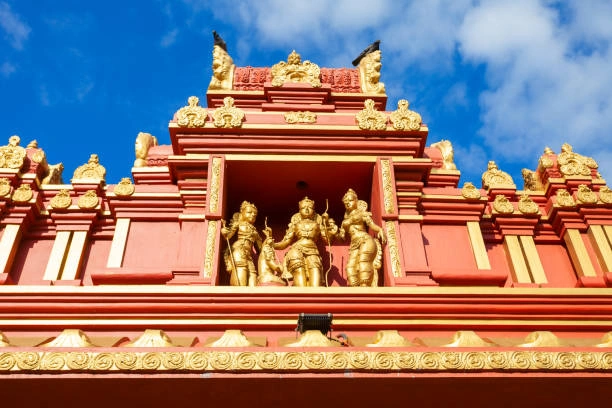
The Key Ramayana Sites in Sri Lanka
The Ramayana sites are spread across the entire island, from the northwest coast to the central highlands and down to the southern shore. Each site is linked to a specific episode in the epic, and visiting them in sequence creates a narrative journey that follows the Ramayana story arc.
Where Rama Prayed After the War
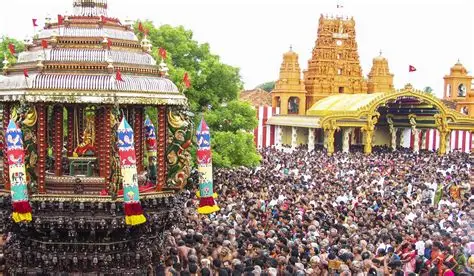
The Munneswaram Temple near Chilaw, about 100 kilometres north of Colombo, is believed to be one of the Pancha Ishwarams — five ancient abodes of Shiva in Sri Lanka. According to Ramayana tradition, this is where Rama stopped to pray to Lord Shiva to absolve himself of the sin of killing Ravana, who was a Brahmin and a great devotee of Shiva. The nearby Manavari Temple is linked to the same event. Both temples remain active and powerful Hindu shrines, and the annual festival draws large crowds.
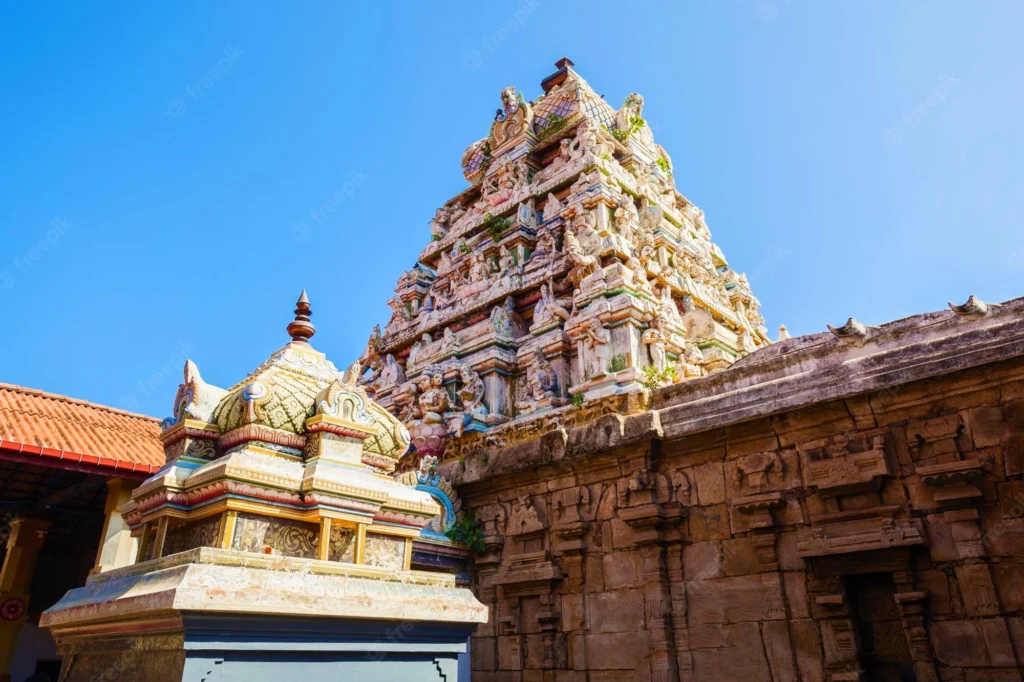
Munneswaram is about 2 hours north of Colombo and is best visited as a half-day stop on the way to or from the Cultural Triangle. Daily puja timings vary — check locally for the most auspicious visiting hours.
Peacock Lanka Travels
Trincomalee — Koneswaram, the Temple of a Thousand Pillars
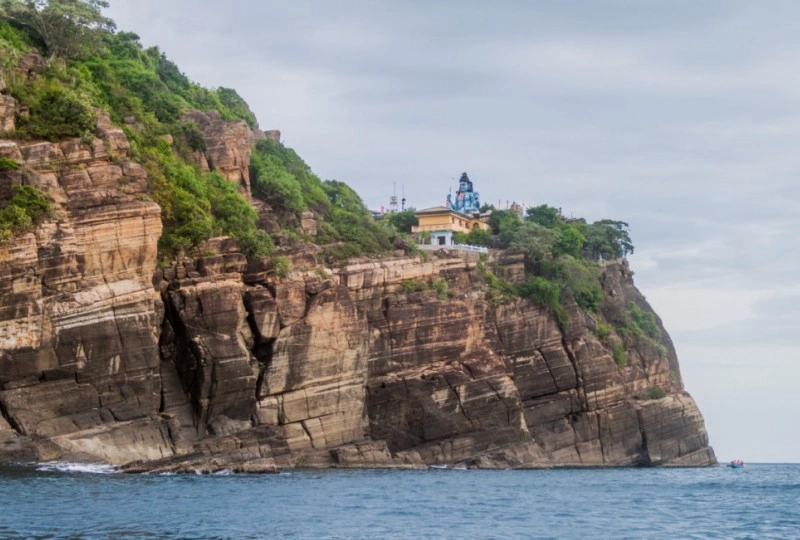
Perched on Swami Rock, a cliff plunging over 100 metres into the Indian Ocean, Koneswaram Temple in Trincomalee is one of the five Pancha Ishwarams and among the most sacred Hindu sites in Sri Lanka. The original temple was a magnificent structure known as Dakshina Kailasam (Southern Kailash) before it was destroyed by Portuguese colonists in the seventeenth century. The temple has been rebuilt and remains a place of intense devotion. Its connection to the Ramayana lies in its ancient sanctity as a site where both Ravana and Rama are believed to have worshipped Lord Shiva.
Sigiriya — Ravana's Sky Palace
While mainstream archaeology attributes Sigiriya to King Kashyapa in the fifth century AD, many Ramayana scholars and devotees believe the rock fortress was originally connected to King Ravana. The scale of the engineering, the sky-high location, and the advanced water gardens are cited as evidence of Ravana’s legendary technological prowess. Whether you accept this connection or view Sigiriya purely through historical lenses, the climb to the summit of this 200-metre rock monolith is one of Sri Lanka’s most unforgettable experiences.
Seetha Amman Temple — Where Sita Was Held Captive
Tucked in a valley near Nuwara Eliya in the central highlands, the Seetha Amman Temple marks what is believed to be the location of Ashoka Vatika — the garden where Ravana held Sita captive. The small but deeply sacred temple sits beside a stream, and the surrounding rocks bear what devotees believe are impressions of Sita’s feet and Hanuman’s footprints. The site has an intimate, powerful spiritual atmosphere that many pilgrims describe as deeply moving. Nearby, circular marks on the rocks in the stream are traditionally interpreted as the places where Sita bathed.
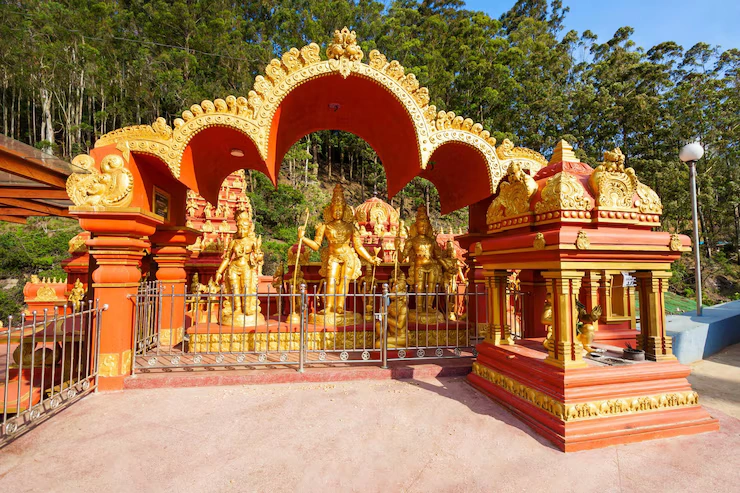
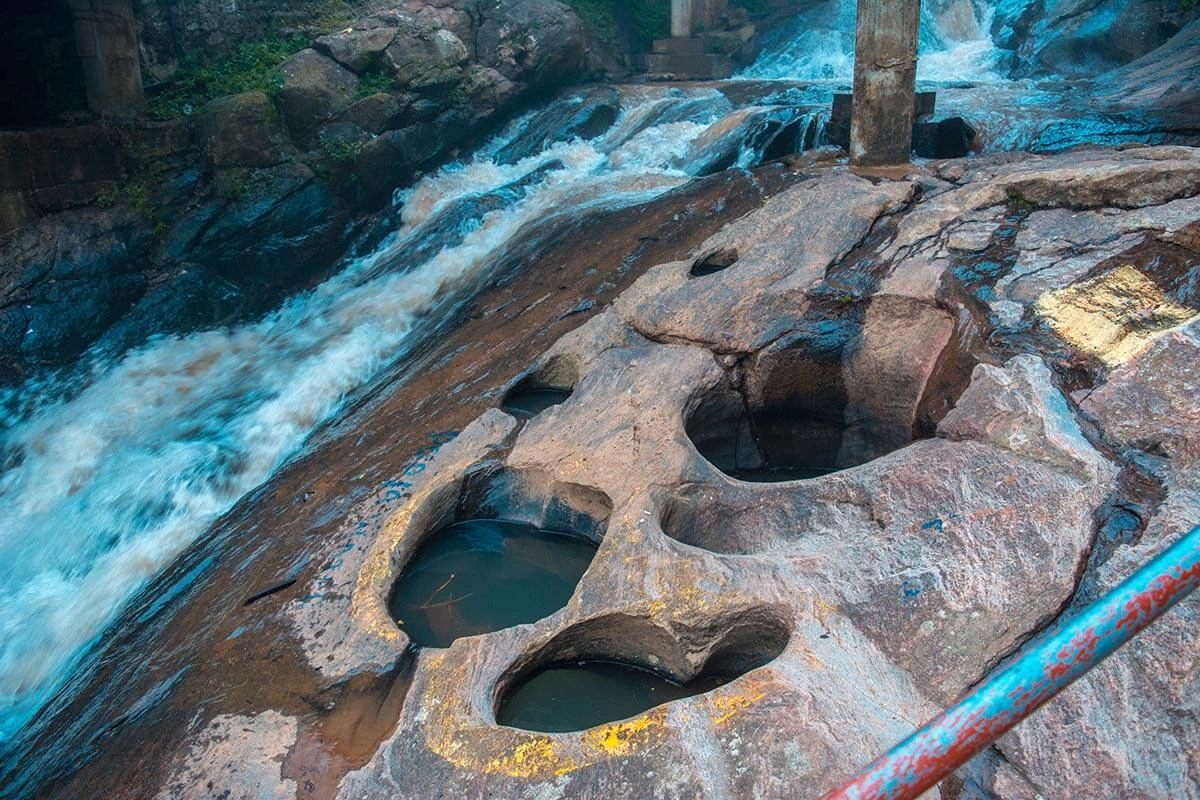
Seetha Amman Temple is about 15 minutes from Nuwara Eliya town. It is a small site and does not take long to visit, but pilgrims often spend considerable time in prayer and meditation. Dress modestly and remove shoes before entering. The temple serves prasadam to visitors.
Peacock Lanka Travels
Divurumpola — Where Sita Proved Her Purity
About ten minutes from Seetha Amman Temple, the ancient site of Divurumpola is believed to be the place where Sita underwent the Agni Pariksha — the trial by fire — to prove her purity after being rescued from Ravana. The name “Divurumpola” translates to “the place of the oath.” Today, a Buddhist temple occupies the site, but its Ramayana significance is well recognised and acknowledged, and Hindu pilgrims frequently visit alongside Buddhist devotees.
Ravana Falls & Ravana Ella Cave — The King's Domain
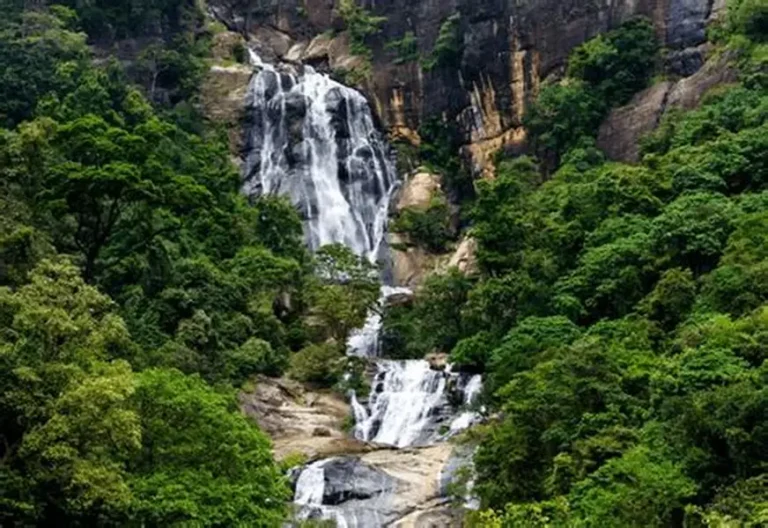
Between Nuwara Eliya and Ella, two sites are closely associated with King Ravana. Ravana Falls is a spectacular 25-metre cascade that is one of the widest waterfalls in Sri Lanka — tradition holds that Ravana bathed here, and the falls were part of the landscape surrounding his domain. Nearby, Ravana Ella Cave is a complex of caverns believed to have been used by Ravana to hide Sita. The cave entrance offers commanding views of the valley below, and archaeological finds suggest it was inhabited in prehistoric times.
Ussangoda — Where Hanuman Set Lanka Ablaze
On the southern coast near Tangalle, the dramatic landscape of Ussangoda is a barren, reddish plateau overlooking the ocean. According to Ramayana tradition, this is one of the sites where Hanuman set Lanka ablaze with his burning tail. The scorched, vegetation-free appearance of the earth is attributed to this divine fire. Geologically, the red soil is due to high iron content, but for devotees the spiritual connection is powerful. The area is also a national park, with wild animals sometimes spotted on the clifftop plateau.
Rumassala — The Mountain Hanuman Dropped
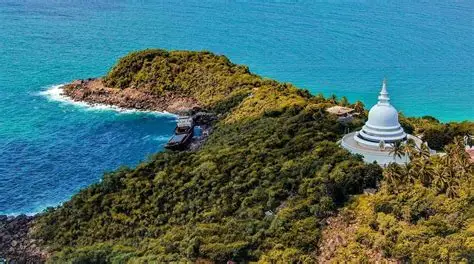
Near Galle on the south coast, the lush hill of Rumassala is believed to be a fragment of the Sanjeevani mountain that Hanuman carried from the Himalayas to save Lakshmana’s life. Unable to identify the correct medicinal herb, Hanuman carried the entire mountain — and a piece broke off and fell here. The hill is indeed home to an unusual concentration of rare medicinal plants not found elsewhere in the region, lending botanical credibility to the legend. A Japanese Peace Pagoda sits at the top, and the hill makes for a pleasant short hike with views across Galle harbour.
Additional Ramayana Sites Worth Visiting
- Panchamukhi Hanuman Temple, Ramboda — a temple dedicated to the five-faced form of Hanuman, set dramatically beside a waterfall near Nuwara Eliya
- Gayathri Peedam, Kandy area — a sacred hilltop site associated with Ravana's devotion to Shiva
- Dondra (Devinuwara) — the southernmost point of Sri Lanka, where Vishnu temples mark the land's edge
- Manawari Temple, Chilaw — closely linked to Munneswaram in the Rama purification narrative
- Kataragama — though primarily a Hindu-Buddhist pilgrimage site, it has Ramayana associations through its ancient Skanda (Murugan) worship traditions
Recommended Ramayana Tour Route (7–10 Days)
- Day 1: Arrive Colombo → Chilaw (Munneswaram & Manavari Temples)
- Day 2: Chilaw → Trincomalee (Koneswaram Temple on Swami Rock)
- Day 3: Trincomalee → Sigiriya (Ravana's Sky Palace, Dambulla Cave Temple)
- Day 4: Sigiriya → Kandy (Temple of the Tooth, Embekka Devalaya, Gayathri Peedam)
- Day 5: Kandy → Nuwara Eliya (Seetha Amman Temple, Divurumpola, Ramboda Hanuman Temple)
- Day 6: Nuwara Eliya → Ella (Ravana Falls, Ravana Ella Cave)
- Day 7: Ella → South Coast (Ussangoda scorched earth)
- Day 8: South Coast → Galle (Rumassala/Sanjeevani hill, Peace Pagoda)
- Day 9–10: Beach relaxation or extended visits → Airport
For Indian travellers: Sri Lanka's ETA (Electronic Travel Authorization) is available online and processed within 24–48 hours. Vegetarian food is available throughout the island — inform your driver-guide and hotels in advance. Tamil and Hindi are understood at most Hindu temples. The best time for the Ramayana tour is October to April when weather is most favourable across all the sites.
Peacock Lanka Travels
Travel Tips for Indian Pilgrims
- Visa: ETA available online — quick and straightforward for Indian passport holders
- Currency: Sri Lankan Rupee (LKR). Indian Rupees are not widely accepted — exchange at the airport on arrival
- Language: Tamil is spoken in many temple areas; English is widely understood; Hindi is understood at major temples
- Vegetarian food: Widely available — South Indian restaurants are found in most towns; inform hotels in advance
- Clothing: Modest dress required at all temples — shoulders and knees covered, shoes removed
- Flights: Direct flights from Chennai, Mumbai, Delhi, Bengaluru, and other Indian cities to Colombo (1.5–3 hours)
- Best time: October to April for the most comfortable weather across all Ramayana sites
- Puja offerings: Flower garlands, coconuts, and camphor are available at every temple
Book Your Ramayana Tour with Peacock Lanka Travels
We have guided hundreds of Indian families and pilgrim groups along the Ramayana Trail. Our drivers know every temple, every puja timing, and every scenic stop between sites. We arrange pure vegetarian meals throughout the journey, Hindi or Tamil-speaking guides on request, temple-appropriate accommodation, and flexible itineraries that allow time for prayer and meditation at each sacred site. Whether you are travelling as a couple, a family, or a large group, we handle every detail so you can focus entirely on the spiritual experience.
We also combine the Ramayana Trail with popular Indian interests — Ayurvedic wellness treatments, gem shopping in Ratnapura, and beach relaxation on the south coast — for a journey that satisfies both spiritual and holiday goals.
Contact Peacock Lanka Travels today and let us create your perfect Sri Lanka tour package tailored to your interests, budget, and travel style.

Ready to Explore?
+94 70 777 7776