
Money is one of those practical travel topics that is boring to read about but stressful to get wrong. Arriving in a new country without understanding the currency, knowing where to withdraw cash, or understanding the tipping culture can lead to unnecessary anxiety — or unnecessary expense. This guide covers everything you need to know about managing money in Sri Lanka so you can focus on enjoying the trip rather than worrying about your wallet.
The Sri Lankan Rupee
The currency is the Sri Lankan Rupee (LKR). Notes come in denominations of 20, 50, 100, 500, 1000, 2000, and 5000 rupees. Coins exist in smaller values but are rarely used in daily transactions. At the time of writing, the exchange rate is approximately 300–320 LKR to 1 USD, though this fluctuates. Always check the current rate before your trip.
Quick mental math: divide the rupee price by 300 to get the approximate USD value. So a 3,000 LKR meal is roughly $10, and a 15,000 LKR hotel room is about $50. This rough calculation helps you assess value quickly.
Peacock Lanka Travels
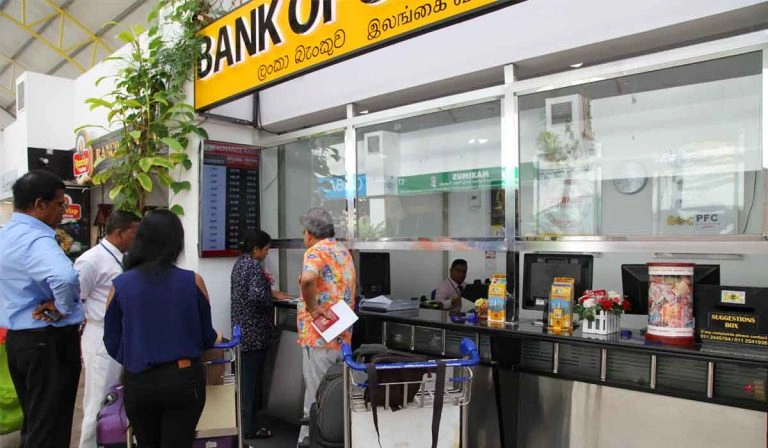
Where to Exchange Money
- Airport exchange counters — available 24/7 at Bandaranaike Airport. Rates are reasonable (not the best, not the worst). Exchange enough for your first day — taxi, tips, and meals.
- ATMs — the best option for most travellers. Available at the airport and in every town. Commercial Bank, Sampath Bank, and HNB are reliable. Most accept Visa and Mastercard.
- Banks — offer the best exchange rates but involve paperwork and queuing. Useful for larger sums.
- Hotels — will exchange money but at poor rates. Use as a last resort.
- Avoid: Street money changers and unofficial exchange services.
Using ATMs
- Maximum withdrawal: Typically 40,000–60,000 LKR per transaction ($130–$200)
- Fees: Most Sri Lankan ATMs charge a small fee (200–400 LKR). Your home bank may add a foreign transaction fee on top.
- Availability: ATMs are plentiful in cities and tourist towns. In remote areas (Knuckles, rural east coast) they can be scarce — withdraw enough cash before heading off the beaten path.
- Card type: Visa and Mastercard work at most ATMs. Amex acceptance is more limited.
- Tip: Inform your bank you are travelling to Sri Lanka before departure to avoid your card being blocked for suspicious foreign activity.
Credit and Debit Cards
Cards are accepted at most mid-range and upscale hotels, larger restaurants, shopping malls, and some tourist-facing businesses. However, Sri Lanka is still largely a cash economy for day-to-day transactions. Street food vendors, tuk-tuk drivers, small guesthouses, market stalls, and many local restaurants are cash only. Always carry a reasonable amount of cash alongside your card.
Tipping Guide
Tipping is appreciated but not compulsory in Sri Lanka. The culture is less tip-oriented than the United States but more so than many Asian countries. Here is a practical guide:
- Restaurants: 10% is standard if service charge is not already included (check the bill — many add 10% automatically)
- Hotel porter: 200–500 LKR per bag
- Housekeeping: 200–500 LKR per day, left on the pillow or bedside table
- Driver-guide (private tour): 1,500–3,000 LKR per day is a typical guideline for good service
- Safari tracker/driver: 500–1,000 LKR per person for a good safari
- Tuk-tuk driver: Rounding up the fare is sufficient — an extra 50–100 LKR
- Temple/site guides: 500–1,000 LKR for a helpful guided tour
- Spa/massage therapist: 10–15% of the treatment cost
Staying Connected
Bargaining is expected in markets, with street vendors, and when hiring tuk-tuks. It is not expected in shops with fixed prices, restaurants, hotels, or supermarkets. Approach bargaining with a smile and a sense of humour — it is a social interaction, not a confrontation. Start at roughly 50–60% of the asking price and work toward a middle ground. If the vendor does not budge, the price may already be fair. Walk away politely if you are n
Keep perspective on bargaining. The difference between the tourist price and the local price for most items is often just a few hundred rupees — less than a dollar. If the price feels fair to you, paying it supports a local livelihood. Save your hard bargaining for large purchases like gemstones or antiques, not for a 100-rupee difference on a souvenir.
Peacock Lanka Travels
How Much to Budget Per Day
- Budget traveller: $30–$50/day (guesthouses, local food, public transport, free/cheap activities)
- Mid-range traveller: $70–$120/day (boutique hotels, mix of local and restaurant dining, private driver, entrance fees)
- Luxury traveller: $200–$500+/day (premium boutique hotels, fine dining, private safaris, spa treatments)
- These are per-person estimates and include accommodation, meals, transport, and activities.
Plan Your Budget with Peacock Lanka Travels
When you book with us, we provide transparent pricing upfront — accommodation, transport, driver-guide, and all entrance fees included in your quote. No hidden costs, no surprises. We design itineraries for every budget level, from comfortable mid-range to exclusive luxury.
Contact Peacock Lanka Travels today and let us create your perfect Sri Lanka tour package tailored to your interests, budget, and travel style.

Ready to Explore?
+94 70 777 7776