
Sri Lanka’s southern coastline is home to many treasures, but none quite like Galle Fort. This UNESCO World Heritage Site is far more than a relic of the colonial era — it is a living, breathing neighbourhood where four centuries of history sit comfortably alongside contemporary cafés, boutique hotels, and art galleries. Whether you are wandering along the sunlit ramparts at golden hour or ducking into a quiet laneway to find a jewellery workshop hidden behind a Dutch-era doorway, Galle Fort rewards curiosity at every turn.
Located roughly 120 kilometres south of Colombo, the fort occupies a rocky peninsula that juts into the Indian Ocean. It is easily one of the most photogenic places in Sri Lanka and a destination that deserves far more than a rushed afternoon visit. This guide covers everything you need to plan a memorable stay — from the history behind the walls to the best places to eat, shop, and watch the sunset.
A Brief History of Galle Fort
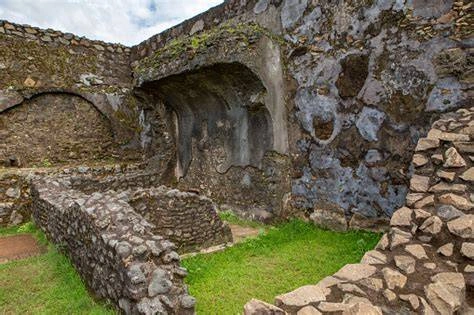
The story of Galle Fort begins in the sixteenth century when Portuguese traders recognised the strategic value of this natural harbour. They constructed the first modest fortifications around 1588 to protect their trading interests along the southern coast. However, it was the Dutch East India Company that transformed the site into the imposing fortress visitors see today.
After capturing the fort in 1640, the Dutch undertook decades of ambitious construction, building massive granite walls, defensive bastions, churches, warehouses, and administrative buildings. The layout followed European military engineering principles, but the builders incorporated local materials and adapted to the tropical environment. The result is an architectural hybrid that feels distinctly different from fortresses found anywhere in Europe.
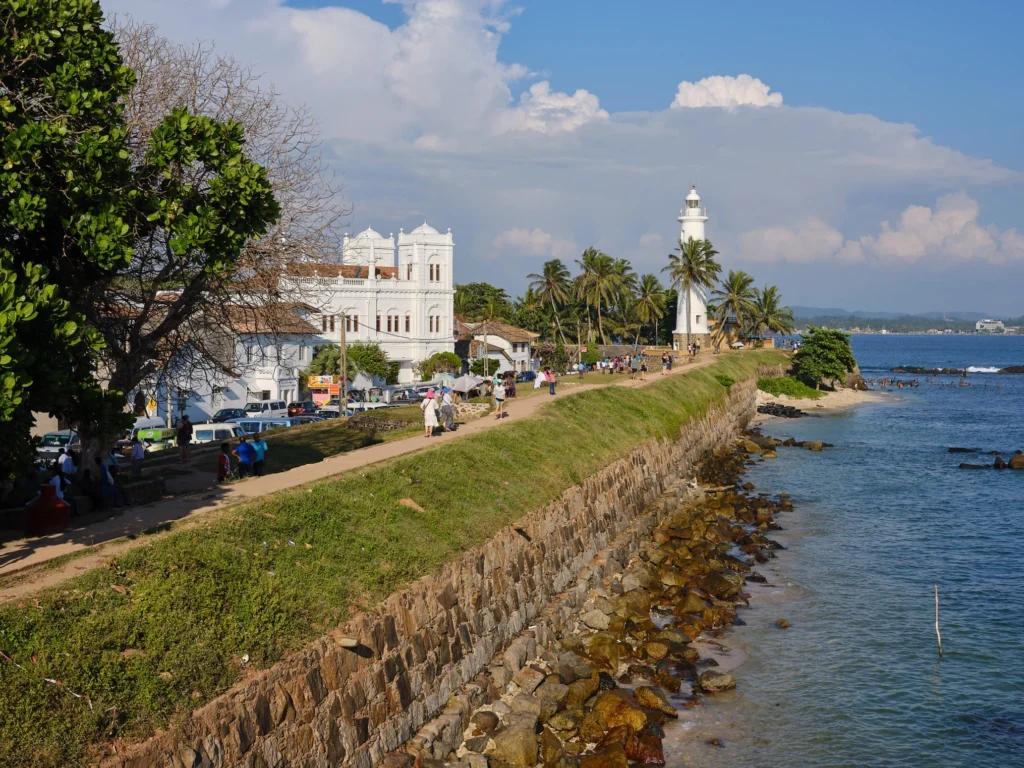
When the British took control in 1796, Galle Fort continued serving as an administrative hub. They added their own touches — a lighthouse, a clock tower, and the coat of arms that still greets visitors at the Old Gate entrance. Today, the fort remains home to a resident community of several hundred families, making it one of the few living heritage forts in the world.
Top Things to Do in Galle Fort
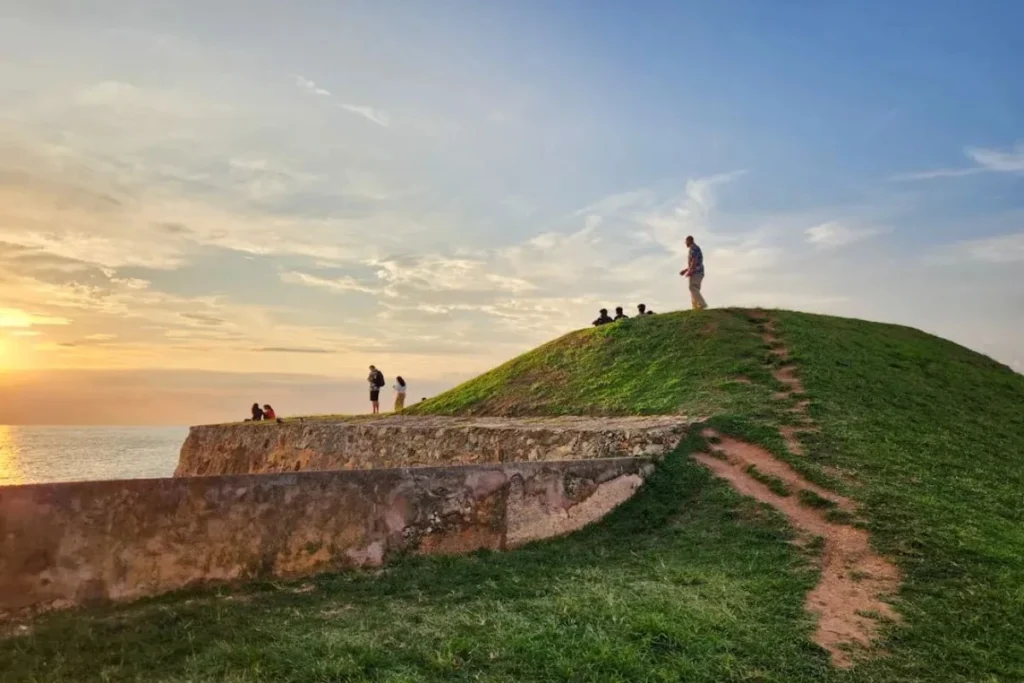
The 2.5-kilometre rampart walk is the essential Galle Fort experience. The path takes you past fourteen bastions, each offering different perspectives of the ocean, the harbour, and the terracotta rooftops below. Start at the Main Gate and work your way clockwise. Flag Rock Bastion is the most popular sunset spot — the views across the Indian Ocean are spectacular as the sky shifts through shades of amber and violet.
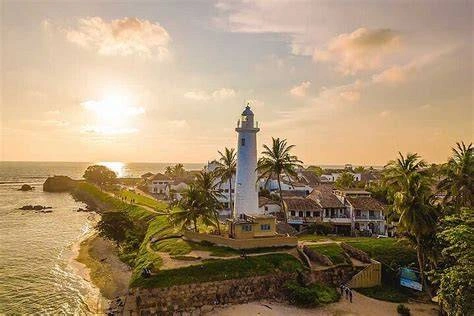
Standing at the southeastern tip of the fort, the white Galle Lighthouse dates to 1848 and is one of the oldest light stations in Sri Lanka. While climbing inside is not permitted, the area around the base is a wonderful spot for photographs, particularly when waves crash against the rocks below.
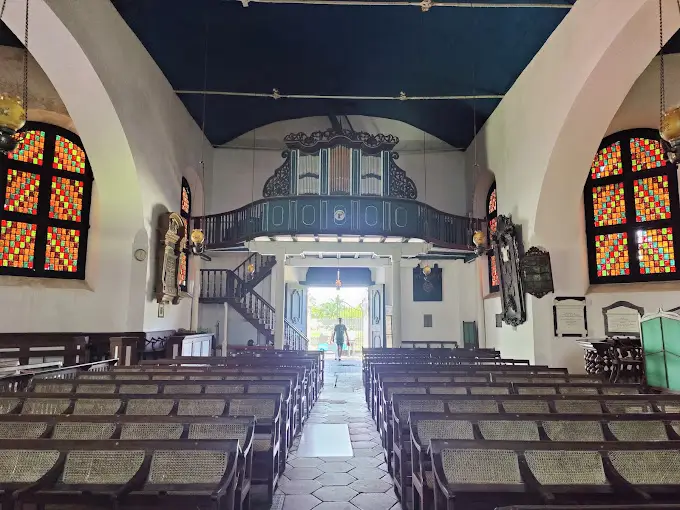
The Dutch Reformed Church, built in 1754, sits near the centre of the fort and features a beautiful interior with original wooden pews, an ornate pulpit, and a floor paved with gravestones of Dutch colonists. The National Maritime Museum, housed in a restored Dutch warehouse near the Old Gate, tells the story of Galle’s relationship with the sea — from ancient trade routes to colonial shipping and marine ecology.
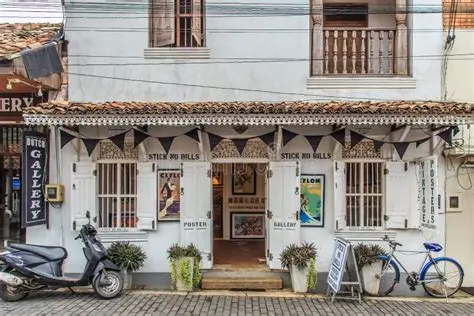
Pro tip: Some of the best moments in Galle Fort come from unscripted exploration. The narrow lanes reveal surprises at every corner — a courtyard garden glimpsed through an open doorway, a cat sleeping on a warm stone step, a lace-maker working on her veranda. Church Street, Pedlar Street, and Leyn Baan Street are particularly atmospheric.
Peacock Lanka Travels
Where to Eat and Drink
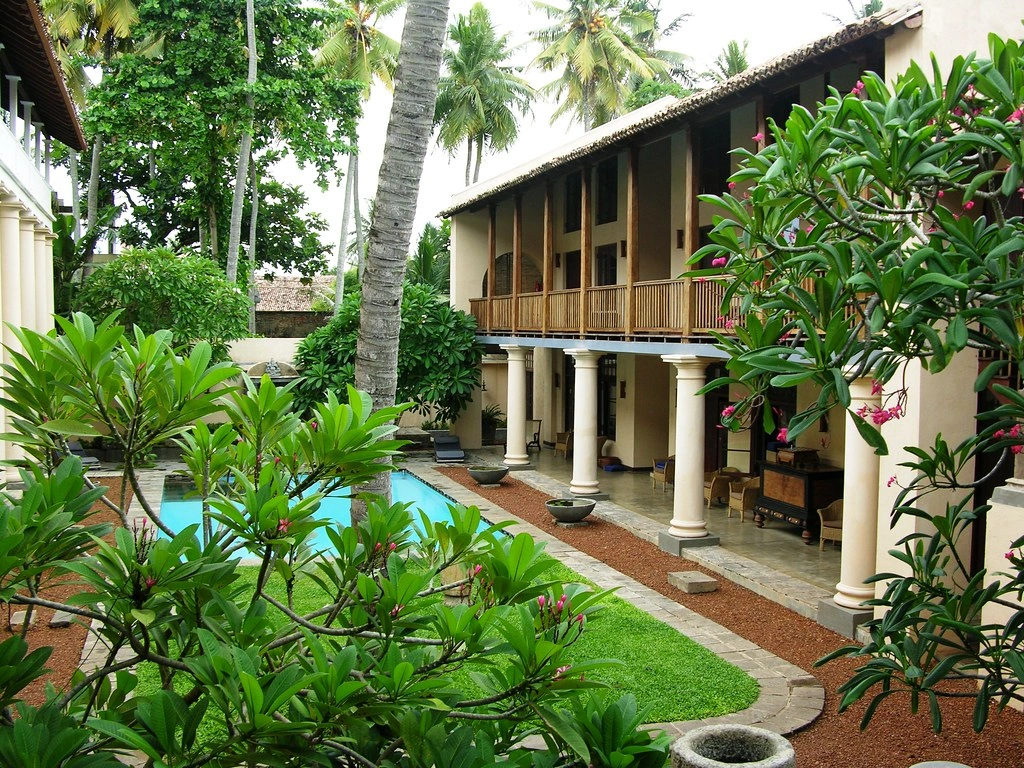
Galle Fort punches well above its weight when it comes to dining. The food scene ranges from casual beachside spots to refined restaurants that would not look out of place in Colombo. For seafood lovers, The Tuna & The Crab by chef Dharshan Munidasa is a standout, serving impeccably fresh dishes in a beautifully restored fort building. Fort Bazaar’s dining room offers a refined Sri Lankan menu in an intimate courtyard setting.
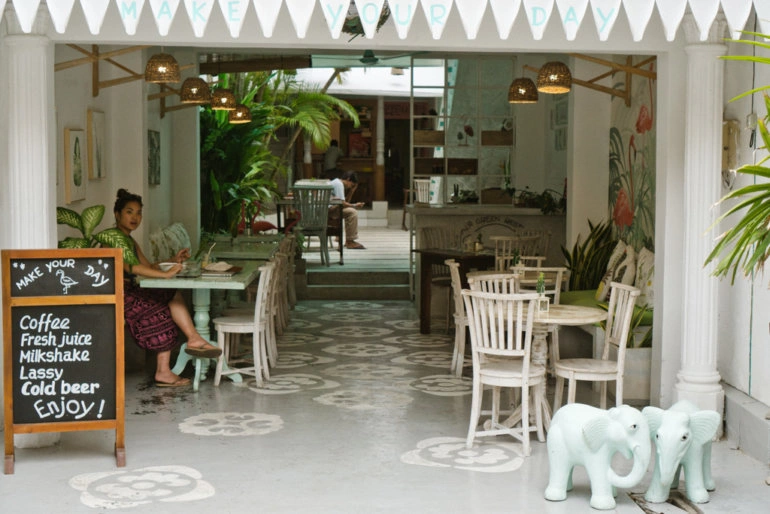
For something more casual, A Minute by Tuk Tuk serves excellent rice and curry lunches at very reasonable prices, and the rooftop bar at Fort Printers is a lovely spot for a sundowner with ocean views. Coffee culture has taken hold inside the fort as well — several third-wave cafés offer single-origin Ceylon brews alongside pastries and light meals.
Shopping Inside the Fort
Galle Fort is one of the best places in Sri Lanka for considered, quality shopping. Barefoot Gallery stocks vibrant handwoven textiles, clothing, and homeware designed by the late Barbara Sansoni, whose bold colour palettes have become synonymous with contemporary Sri Lankan design. Exotic Roots carries a curated selection of spices, teas, and natural skincare products that make excellent gifts.
For jewellery, Galle is historically connected to the Sri Lankan gem trade. Several reputable dealers operate within the fort, offering sapphires, rubies, and moonstones. Stick to established shops and ask for certification if you are making a significant purchase.
Best Time to Visit Galle Fort
The most pleasant weather falls between December and April, when the southwest monsoon has passed and the southern coast enjoys warm, dry days with clear skies. This is peak season, so expect more visitors and higher accommodation prices. The shoulder months of November and May can be excellent — fewer crowds, slightly lower rates, and weather that is still largely cooperative.
Even during the monsoon season from June to September, Galle Fort retains its charm. Rain tends to arrive in short, heavy bursts rather than all-day downpours, and the washed streets and dramatic skies create their own kind of beauty. Hotel rates are also significantly lower during this period.
Peacock Lanka Travels
How to Get to Galle Fort
From Colombo, the most scenic route is by train. The coastal railway line hugs the shoreline for much of the journey, offering gorgeous ocean views, and the trip takes approximately two and a half to three hours. Trains depart regularly from Colombo Fort station. By road, Galle is about two hours from Colombo via the Southern Expressway, or roughly three hours along the slower but more scenic coastal road through Bentota and Hikkaduwa.
- By train: Colombo Fort → Galle (2.5–3 hours, scenic coastal route)
- By expressway: Colombo → Galle (2 hours via Southern Expressway)
- By coastal road: Colombo → Galle (3 hours via Bentota and Hikkaduwa)
- From the airport: Approximately 2.5 hours by private transfer
- There is no entrance fee to the fort — it is a public neighbourhood
How Long Should You Spend?
You can see the main highlights of Galle Fort in a single day, but spending at least one night inside the fort is highly recommended. The atmosphere changes dramatically after the day-trippers leave — the streets grow quieter, the restaurants fill with a more intimate crowd, and a walk along the ramparts at dusk or dawn becomes something genuinely magical. Two nights is ideal if you also want to explore the beaches nearby at Unawatuna, Jungle Beach, or Dalawella.
Practical Tips for Visiting
- Wear comfortable walking shoes — the streets are mostly cobblestone and the rampart walk involves uneven surfaces
- Carry sunscreen and water, especially during midday hours, as shade is limited along the walls
- Galle Fort is very safe and walkable at all hours
- Respect the residential nature of the area — not every photogenic doorway belongs to a shop
- If visiting during the Galle Literary Festival (typically January), book accommodation well in advance
Explore Galle Fort with Peacock Lanka Travels
You can see the main highlights of Galle Fort in a single day, but spending at least one night inside the fort is highly recommended. The atmosphere changes dramatically after the day-trippers leave — the streets grow quieter, the restaurants fill with a more intimate crowd, and a walk along the ramparts at dusk or dawn becomes something genuinely magical. Two nights is ideal if you also want to explore the beaches nearby at Unawatuna, Jungle Beach, or Dalawella.
Contact Peacock Lanka Travels today and let us create your perfect Sri Lanka tour package tailored to your interests, budget, and travel style.

Ready to Explore?
+94 70 777 7776